
Japonia-Korea: 13 dni. I grupa 19-31 III 2026. II grupa 7-19 IV 2026
Ważne: Warunki rezygnacji z wyjazdu znajdziemy w zakładce „Wyjazdy”
Japonia jest najpiękniejsza w okresie kwitnienia wiśni. Organizowane są specjalne wyjazdy do Japonii w tym czasie, aby oglądać ten cud natury. Najintensywniejszy okres kwitnienia wiśni w Japonii wypada od połowy marca do połowy kwietnia. Oczywiście mogą być przesunięcia czasowe.
Ubezpieczenie zdrowotne: Nie wszystkie agencje turystyczne, z którymi współpracuje Nowojorski Klub Podróżnika mają wystarczające ubezpieczenie zdrowotne, stąd też bezpieczniej jest wykupić własne. Najlepiej wykupić ubezpieczenie na cały rok na różne wyjazdy. Np. w przypadku wyjazdu do Japonii i Korei jest ono tańsze niż ubezpieczenie tylko na jeden wyjazd do Japonii i Korei. Przy każdym wyjeździe będę podawał, czy trzeba wykupić takie ubezpieczenie, czy też nie.
Link do agencji ubezpieczeniowej: https://www.allianztravelinsurance.com/
Na ten wyjazd załatwiamy indywidualnie ubezpieczenie. Wystarczy podstawowe ubezpieczenie. Najkorzystniejsze jest na cały rok, na wszystkie wyjazdy. Cena $125. Możemy wykupić także droższe.
Lecimy koreańskimi liniami lotniczymi OZ to kod IATA linii lotniczych Asiana Airlines
I grupa: 19 – 31 marca 2026
II grupa: 7-19 kwietnia 2026
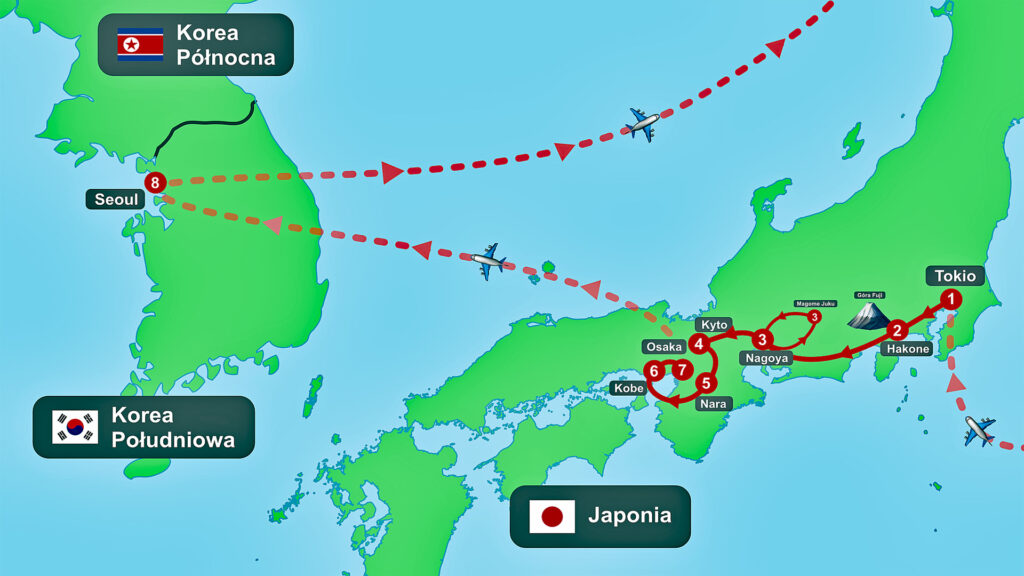


Day 1- March 19 New York – Tokyo
Flight New York (departure from JFK – 3 hours you have to be at the airport earlier) – Tokyo. Our vacation will begin when we are on board the plane flying to Tokyo, the capital of Japan. We will fly all night.
Day 2- March 20 Arrival in Tokyo
After arriving at Narita Airport in Tokyo, customs clearance and baggage collection, we will meet our Tokyo guide and go to our luxury hotel for a well- deserved rest.
Hotel: Nikko Narita Airport Hotel or similar
Day 3 – March 21 Tokyo (B/L/D)
Today we will visit the Meiji-jingu Shrine. Built in 1920, the shrine is dedicated to Emperor Meiji and Empress Shaken. Its vast grounds with beautiful. Next, we visit the grounds of the Imperial Palace, Surrounded by a moat and double walls, they were once the gardens of the gigantic Edo Castle, built by the Tokugawa Shoguns and the seat of the Tokugawa government in Edo. In the ImperialPalace Gardens, you will see the Nijubashi Bridge, the main bridge leading to the Palace, the most famous bridge in Japan. You will also see the Chidori-ga-fuchi Moat. Walking along is very popular with Tokyo residents and tourists during the cherry blossom festival. Then we will go to Sensoji Temple,it is the oldest and most visited temple in Tokyo . It is a prime example of Japanese Buddhist religious architecture. The temple is very colorful, red, black and gold, has a steep roof, and next to it stands a five-story pagoda. We will walk along Nakamise Street, which dates back to the 17th century; literally translated, Nakamise means „Street among shops.” Leading from the temple’s outer gate, the Thunder Gate to Sensoji Temple itself, the street is lined with shops selling traditional Japanese souvenirs, such as fans and kimonos, and traditional Japanese food. After lunch, we’ll cruise on a luxury Symphony Cruise around Tokyo Bay’s landmarks, including Odaiba Island and the Rainbow Bridge, which connects Odaiba to the rest of Tokyo. We will end the day with a visit to the Ginza district. Ginza is a luxury district of Tokyo, administratively part of the city’s central district. It is one of the city’s most expensive districts.
Hotel: Sunshine City Prince Hotel or similar
Day 4 – March 22 Tokyo – Mt. Fuji – Hakone (B/L/D)
Today we go to see Mt. Fuji. The last eruption of this active volcano took place in 1708. It is the highest mountain in Japan, with a height of 3,776 meters. It is no surprise that this perfectly shaped volcanic cone has become an object of worship, a sacred mountain and a place of visit for many believers, artists and tourists. We will travel to Mt. Fuji Fifth Station, the most popular starting point for climbing Mt. Fuji, which is accessible by bus.
After lunch, we will visit Oshino Hakkai. This name refers to the eight ponds into which water from Mt. Fuji flows underground. These ponds are a natural national treasure of Japan. Their crystal clear water comes from the melting snows of Mt. Fuji, and has been naturally filtered through the ground for about 80 years. The area around Oshino Hakkai includes a museum, restaurants, and souvenir shops. We will see Lake Kawaguchi, the second largest of the Five Fuji Ponds, and has the longest shoreline of all of these lakes. This area is the most popular resort in Japan. We will visit Heiwa Park. This vast park covers an area of about 150 hectares. The park is dedicated to peace. It is very popular with tourists, especially in spring, during the Hanami season (when the cherry blossoms are in bloom). The park features a statue of Kannon, the god of mercy, many forest trails, ponds, and a large cemetery. In the evening, we will stop at the Onsen Ryokan (a Ryokan is a private room with a jacuzzi filled with water from hot volcanic springs) in the town of Yudanaka, where we will be able to bathe in the healing waters of the spa, before ending the day with a traditional Japanese Kaiseki banquet.
Hotel: Hamanako Royal Hotel or similar
Day 5- March 23 Shizuoka – Magome Juku – Nagoya (B/L/D)
Today we will visit the Atsuta Shrine. Since ancient times, it has been a particularly revered place, belonging to the group of Great Shrines of Ise. The shrine’s treasury, the Bunkaden, houses over 4,000 objects, 174 of which are Japan’s most important cultural relics. Then we drive to Magome-Juku, an ancient road that connected Kyoto and Edo during the Edo period. Which runs through the Kiso Valley. This well-preserved section of the old route is located in the present-day city of Nakatsugawa. We will visit Ena Gorge; this is the valley of the Kiso River located in its middle reaches, which runs through the towns of Ena and Nakatsugawa. Ena Gorge was so named by Shiga Shigetaka, a geographer of the time, who was fascinated by the harmony of the mysteriously shaped rocks that seemed to be continuous with the view of the lake and the Oi Dam. The mysteriously shaped rock formations of Ena Gorge are known throughout Japan.
Hotel: Otsu Prince Hotel or similar
Day 6- March 24 Nagoya ~ Kyoto (B/ L/ D)
We will visit Kiyomizu Temple, founded in 780 on a forested hill above Otowa Waterfall. Also known as the “Pure Water Temple,” it is one of the most famous historical temples in Japan. The main room of the temple houses a wooden stage, which offers a magnificent view of the surrounding wooded hills and the city of Kyoto in the distance. Later, we will visit Nijo Castle. Built in the 17th century, it initially served the Tokugawa shogunate. In 1994 it was added to the UNESCO World Heritage List. We will visit the Kinkakuji Temple, covered in 18-karat gold leaf, a three-story structure that was built in 1397. Finally, we will visit the Gion district, best known for its geisha presence. We will see the old Geisha Quarter and Pontocho Avenue, with its narrow cobblestone streets and vibrant nightlife.
Hotel: New Hankyu Kyoto Hotel or similar
Day 7- March 25 Kyoto (B/ L/ D)
Today we will visit Arashiyama,it is a pleasant, tourist y district in the western outskirts of Kyoto. The area has been a popular destination since the Heian Period (794-1185), when nobles would enjoy its natural setting. Arashiyama is particularly popular during the cherry blossom and fall color seasons. The Togetsukyo Bridge is Arashiyama’s well known, central landmark. Many small shops, restaurants and other attractions are found nearby, including Tenryuji Temple, Arashiyama’s famous bamboo groves and pleasure boats that are available for rent on the river.North of central Arashiyama the atmosphere becomes less touristy and more rural, with several small temples scattered along the base of the wooded mountains. The area north of the Togetsukyo Bridge is also known as Sagano, while „Arashiyama” technically refers just to the mountains south of the river but is commonly used to name the entire district. Later, we will visit Fushimi Inari Taisha, it is an important Shinto shrine in southern Kyoto. It is famous for its thousands of vermilion torii gates, which straddle a network of trails behind its main buildings. The trails lead into the wooded forest of the sacred Mount Inari, which stands at 233 meters and belongs to the shrine grounds.It is the most important of several thousands of shrines dedicated to Inari, the Shinto god of rice. Foxes are thought to be Inari’s messengers, resulting in many fox statues across the shrine grounds. Fushimi Inari Shrine has ancient origins, predating the capital’s move to Kyoto in 794.
Hotel: New Hankyu Kyoto Hotel or similar
Day 8- March 26 Kyoto – Nara – Kobe – Osaka (B/L/D)
Today we travel to Nara Park, which is one of the “Places of Beautiful Scenery” designated by the Ministry of Education, Culture, Sports, Science and Technology of Japan; the park is approximately 502 hectares in size. There are over 1,200 wild sika deer living freely here, classified as a natural treasure of Japan. Visitors to the park can buy “deer” crackers to feed the animals in the park. Sika deer, considered messengers of the gods in the Shinto religion, roam freely. The park is home to the Todaiji Shrine. This is a Buddhist temple complex that was once one of the mighty Seven Great Temples, located in the city of Nara. Its Great Buddha Hall is home to the world’s largest bronze statue of the Vairocana Buddha, known in Japanese simply as Daibutsu. The temple also serves as Japan’s headquarters for the Kegon school of Buddhism. The temple is a UNESCO World Heritage Site as one of the „Historic Monuments of Ancient Nara”. For lunch, we go to Kobe to try the famous Kobe beef. After lunch, we drive to Osaka. Our last visit of the day is Shinsaibashi, a popular shopping, entertainment and restaurant district. It is located north of Dotonbori. Dodonbori is a part of the city that stretches along the Dodonbori canal. It is a popular shopping, entertainment and restaurant district. Dodonbori is known for its hundreds of neon signs and advertising signs, including the famous Glico Running Man and Kani Doraku Crab signs.
Hotel: Nikko Kansai Airport Hotel or similar
Day 30 – March 27 Osaka – Incheon – Seoul (B/X/D)
By Air A coach will take us to Osaka Airport, from where we will fly to Korea. Upon arrival at Incheon International Airport, after customs and baggage claim, we will meet our guide and drive to a luxury hotel for some well-deserved rest and relaxation.
Hotel: Richen County Residence Hotel or similar
Day 10- March 28 Seoul (B/L/D)
We will visit the National Museum of Korean Folk Art, located on the grounds of the beautiful Gyeongbokgung Palace. This museum helps foreigners understand Korean culture and the Korean way of life. We will learn about the unique features of Korea compared to other neighboring East Asian countries such as China and Japan. We will outside visit the Blue House, the executive offices and official residence of the South Korean head of state, the President of the Republic of Korea. The Blue House is actually acomplex of buildings, built mainly in traditional Korean style with some modern architectural elements. The Cheonggyecheon Stream walk is the most famous tourist attraction in Korea. The total length is 5.8 km, and the water is very clean. Twenty-two beautifully designed bridges have been built across the stream. Then we go to Bukchon Hanok Village, it is a major traditional Korean residential area in Seoul. During the Joseon Dynasty, high- ranking government officials and nobility typically dwelled in this neighborhood. Visitors can immerse in the beauty of traditional architecture and the fun of exploring through the alleys. At there, make sure to look for the “Bukchon 8 Spots ”, which refers to Bukchon’s eight most scenic viewpoints, each with its own sights and charms.Later, we go to visit Insa-dong,the focal point of lively Insadong is its pedestrianized main street, which is crammed with teahouses and Korean eateries, plus shops selling traditional goods like pottery, tea and handmade hanji paper.
Hoel: Richen County Residence or similar
Day 11- March 29 Seoul (B/L/D)
Today we will visit Namiseom Island, it is a very popular walking area for the city’s residents. Animals and plants are bred here. A large part of the scenes of the series Winter Sonata, a popular Korean soap opera, was filmed on the island. Here, visitors can stroll along tree lined paths, enjoy beautiful gardens, rent bicycles, and explore charming cafes and art installations. Then we go to Petite France, immerse yourself in the enchanting Petite France Village,a haven of French culture in Gapyeong. Experience French cuisine, fashion, architecture, and more. Discouver themed pavilions inspired by “flowers, stars,and the little prince.” Indulge in the melodies of a 200-year-old music box and explore the unique French culture. Next, we visit Italian Village embark on a magical journey through Pioncchio’s adventures at the newly opened Italian Village, where you’ll feel like you’re walking on European streets, surrounded by elegant architecture, exotic paths, and stunning pavilions. It’s the ultimate check in hotspot for those seeking an authentic Italian experience in Korea. The Garden of Morning Calm was founded by professor Sang-kyung Han, the founder and his employees have strived to embrace the natural beauty of Korea, oriental mystique, and the spirit of the Korean people in the garden. The design of the garden focused on curves, spaces and asymmetric balance, and Korea’s unique beauty to express classic elegance and fabulousness.
Hotel: Richen County Residence or similar hotel
Day 12- March 30 Seoul (B/L/D)
Depart Seoul early this morning, and head to the Korean Demilit arized Zone (DMZ). Learn about the history of the conflict between the North and South. Upon arrival at Imjingak Park, view Freedom Bridge, and continue to Dorasan Station, and Dora Observatory from where you can look at North Korea through binoculars. After, experience the Third Tunnel, one of four known tunnels stretching under the border between North and South Korea. Following lunch at a local restaurant, return to Seoul. Later, head to the energetic Myeongdong district. Discover trendy fashion boutiques, luxury department stores, cosmetics shops, and street food stalls offering a wide array
of local delicacies. N Seoul Tower a complex culture space in Seoul is where the cloud seem to meet with Namsan Miuntain . It show visitors the harmony of Namsa’s nature. The 21st century state of the art, resting with leisure and various cultures. Which is a symbol of Seoul now. Was established at the highest point to glance at the most beautiful images of Seoul.
Hotel: Richen County Residence or similar hotel
Day 13 – March 31 Seoul – New York (B)
Today we will take a flight back to our hometown.
The itinerary is subject to change depending on the weather, traffic conditions and other unforeseen factors.
Cena: $4480
Cena zawiera:
❖ International air tickets from NYC to Tokyo, Osako to Korea, Korea come back to NYC
❖ Included 3~ 4 stars deluxe hotels. Preferred accommodations subject to change to similar class accommodations. Double occupancy.
❖ Admission to sightseeing spots listed in the day-to-day itinerary.
❖ Qualified English-speaking guides throughout the tour.
❖ American style buffet breakfasts, lunches, Dinner, including special local meal
❖ All airport transfers, from arrival date to departure date.
❖ All transportation between cities. Air conditioning coach services in each city. All coaches are within 3 years old, all drivers have at least 5 years driving experiences.
❖ Complimentary Mineral Water
❖ Quality Control Managers work 24/7.
Cena nie zawiera:
-Tip for the tour guide $10 per person per day.
-Ubezpieczenie chińskiej agencji jest niewystarczające, stąd też ubezpieczę dodatkowo od choroby i nieszczęśliwych wypadków w Korei i Japonii. Wysokość ubezpieczenia wynosi 7,2% od ceny biletów lotniczych. Czekam na podanie ceny biletów przez chińską agencję.
Formularz zgłoszeniowy (kliknąć na napis „Formularz”)
Proszę dostarczyć jak najszybciej
-wypełniony formularz
–kopię paszportu- paszport powinien być ważny co najmniej 6 miesięcy od daty powrotu z kraju docelowego.
–zaliczkę w wysokości $1000
Na adres: New York Travel Club. 60-09 56th Drive Maspeth, NY 11378
Można także przesłać emailem: rkoper@hotmail.com rkoper2@gmail.com
Czeki wypisujemy na: K&M International Travel Inc.
Całość wpłacamy trzy miesiące przed wyjazdem
W przypadku innej formy płatności proszę dzwonić pod numer tel. 347 876 3738
Day 1 – April 7 New York – Tokyo
Flight New York (departure from JFK – 3 hours you have to be at the airport earlier) – Tokyo. Our vacation will begin when we are on board the plane flying to Tokyo, the capital of Japan. We will fly all night.
Day 2- April 8 Arrival in Tokyo
After arriving at Narita Airport in Tokyo, customs clearance and baggage collection, we will meet our Tokyo guide and go to our luxury hotel for a well- deserved rest.
Hotel: Nikko Narita Airport Hotel or similar
Day 3- April 9 Tokyo (B/L/D)
Today we will visit the Meiji-jingu Shrine. Built in 1920, the shrine is dedicated to Emperor Meiji and Empress Shaken. Its vast grounds with beautiful. Next, we visit the grounds of the Imperial Palace, Surrounded by a moat and double walls, they were once the gardens of the gigantic Edo Castle, built by the Tokugawa Shoguns and the seat of the Tokugawa government in Edo. In the ImperialPalace Gardens, you will see the Nijubashi Bridge, the main bridge leading to the Palace, the most famous bridge in Japan. You will also see the Chidori-ga-fuchi Moat. Walking along is very popular with Tokyo residents and tourists during the cherry blossom festival. Then we will go to Sensoji Temple,it is the oldest and most visited temple in Tokyo . It is a prime example of Japanese Buddhist religious architecture. The temple is very colorful, red, black and gold, has a steep roof, and next to it stands a five-story pagoda. We will walk along Nakamise Street, which dates back to the 17th century; literally translated, Nakamise means „Street among shops.” Leading from the temple’s outer gate, the Thunder Gate to Sensoji Temple itself, the street is lined with shops selling traditional Japanese souvenirs, such as fans and kimonos, and traditional Japanese food. After lunch, we’ll cruise on a luxury Symphony Cruise around Tokyo Bay’s landmarks, including Odaiba Island and the Rainbow Bridge, which connects Odaiba to the rest of Tokyo. We will end the day with a visit to the Ginza district. Ginza is a luxury district of Tokyo, administratively part of the city’s central district. It is one of the city’s most expensive districts.
Hotel: Sunshine City Prince Hotel or similar
Day 4 – April 10 Tokyo – Mt. Fuji – Hakone (B/L/D)
Today we go to see Mt. Fuji. The last eruption of this active volcano took place in 1708. It is the highest mountain in Japan, with a height of 3,776 meters. It is no surprise that this perfectly shaped volcanic cone has become an object of worship, a sacred mountain and a place of visit for many believers, artists and tourists. We will travel to Mt. Fuji Fifth Station, the most popular starting point for climbing Mt. Fuji, which is accessible by bus.
After lunch, we will visit Oshino Hakkai. This name refers to the eight ponds into which water from Mt. Fuji flows underground. These ponds are a natural national treasure of Japan. Their crystal clear water comes from the melting snows of Mt. Fuji, and has been naturally filtered through the ground for about 80 years. The area around Oshino Hakkai includes a museum, restaurants, and souvenir shops. We will see Lake Kawaguchi, the second largest of the Five Fuji Ponds, and has the longest shoreline of all of these lakes. This area is the most popular resort in Japan. We will visit Heiwa Park. This vast park covers an area of about 150 hectares. The park is dedicated to peace. It is very popular with tourists, especially in spring, during the Hanami season (when the cherry blossoms are in bloom). The park features a statue of Kannon, the god of mercy, many forest trails, ponds, and a large cemetery. In the evening, we will stop at the Onsen Ryokan (a Ryokan is a private room with a jacuzzi filled with water from hot volcanic springs) in the town of Yudanaka, where we will be able to bathe in the healing waters of the spa, before ending the day with a traditional Japanese Kaiseki banquet.
Hotel: Hamanako Royal Hotel or similar
Day 5 – April 11 Shizuoka – Magome Juku – Nagoya (B/L/D)
Today we will visit the Atsuta Shrine. Since ancient times, it has been a particularly revered place, belonging to the group of Great Shrines of Ise. The shrine’s treasury, the Bunkaden, houses over 4,000 objects, 174 of which are Japan’s most important cultural relics. Then we drive to Magome-Juku, an ancient road that connected Kyoto and Edo during the Edo period. Which runs through the Kiso Valley. This well-preserved section of the old route is located in the present-day city of Nakatsugawa. We will visit Ena Gorge; this is the valley of the Kiso River located in its middle reaches, which runs through the towns of Ena and Nakatsugawa. Ena Gorge was so named by Shiga Shigetaka, a geographer of the time, who was fascinated by the harmony of the mysteriously shaped rocks that seemed to be continuous with the view of the lake and the Oi Dam. The mysteriously shaped rock formations of Ena Gorge are known throughout Japan.
Hotel: Otsu Prince Hotel or similar
Day 6: -April 12 Nagoya ~ Kyoto (B/ L/ D)
We will visit Kiyomizu Temple, founded in 780 on a forested hill above Otowa Waterfall. Also known as the “Pure Water Temple,” it is one of the most famous historical temples in Japan. The main room of the temple houses a wooden stage, which offers a magnificent view of the surrounding wooded hills and the city of Kyoto in the distance. Later, we will visit Nijo Castle. Built in the 17th century, it initially served the Tokugawa shogunate. In 1994 it was added to the UNESCO World Heritage List. We will visit the Kinkakuji Temple, covered in 18-karat gold leaf, a three-story structure that was built in 1397. Finally, we will visit the Gion district, best known for its geisha presence. We will see the old Geisha Quarter and Pontocho Avenue, with its narrow cobblestone streets and vibrant nightlife.
Hotel: New Hankyu Kyoto Hotel or similar
Day 7- April 13 Kyoto (B/ L/ D)
Today we will visit Arashiyama,it is a pleasant, tourist y district in the western outskirts of Kyoto. The area has been a popular destination since the Heian Period (794-1185), when nobles would enjoy its natural setting. Arashiyama is particularly popular during the cherry blossom and fall color seasons. The Togetsukyo Bridge is Arashiyama’s well known, central landmark. Many small shops, restaurants and other attractions are found nearby, including Tenryuji Temple, Arashiyama’s famous bamboo groves and pleasure boats that are available for rent on the river.North of central Arashiyama the atmosphere becomes less touristy and more rural, with several small temples scattered along the base of the wooded mountains. The area north of the Togetsukyo Bridge is also known as Sagano, while „Arashiyama” technically refers just to the mountains south of the river but is commonly used to name the entire district. Later, we will visit Fushimi Inari Taisha, it is an important Shinto shrine in southern Kyoto. It is famous for its thousands of vermilion torii gates, which straddle a network of trails behind its main buildings. The trails lead into the wooded forest of the sacred Mount Inari, which stands at 233 meters and belongs to the shrine grounds.It is the most important of several thousands of shrines dedicated to Inari, the Shinto god of rice. Foxes are thought to be Inari’s messengers, resulting in many fox statues across the shrine grounds. Fushimi Inari Shrine has ancient origins, predating the capital’s move to Kyoto in 794.
Hotel: New Hankyu Kyoto Hotel or similar
Day 8- April 14 Kyoto – Nara – Kobe – Osaka (B/L/D)
Today we travel to Nara Park, which is one of the “Places of Beautiful Scenery” designated by the Ministry of Education, Culture, Sports, Science and Technology of Japan; the park is approximately 502 hectares in size. There are over 1,200 wild sika deer living freely here, classified as a natural treasure of Japan. Visitors to the park can buy “deer” crackers to feed the animals in the park. Sika deer, considered messengers of the gods in the Shinto religion, roam freely. The park is home to the Todaiji Shrine. This is a Buddhist temple complex that was once one of the mighty Seven Great Temples, located in the city of Nara. Its Great Buddha Hall is home to the world’s largest bronze statue of the Vairocana Buddha, known in Japanese simply as Daibutsu. The temple also serves as Japan’s headquarters for the Kegon school of Buddhism. The temple is a UNESCO World Heritage Site as one of the „Historic Monuments of Ancient Nara”. For lunch, we go to Kobe to try the famous Kobe beef. After lunch, we drive to Osaka. Our last visit of the day is Shinsaibashi, a popular shopping, entertainment and restaurant district. It is located north of Dotonbori. Dodonbori is a part of the city that stretches along the Dodonbori canal. It is a popular shopping, entertainment and restaurant district. Dodonbori is known for its hundreds of neon signs and advertising signs, including the famous Glico Running Man and Kani Doraku Crab signs.
Hotel: Nikko Kansai Airport Hotel or similar
Day 9- April 15 Osaka – Incheon – Seoul (B/X/D)
By Air A coach will take us to Osaka Airport, from where we will fly to Korea. Upon arrival at Incheon International Airport, after customs and baggage claim, we will meet our guide and drive to a luxury hotel for some well-deserved rest and relaxation.
Hotel: Richen County Residence Hotel or similar
Day 10- April 16 Seoul (B/L/D)
We will visit the National Museum of Korean Folk Art, located on the grounds of the beautiful Gyeongbokgung Palace. This museum helps foreigners understand Korean culture and the Korean way of life. We will learn about the unique features of Korea compared to other neighboring East Asian countries such as China and Japan. We will outside visit the Blue House, the executive offices and official residence of the South Korean head of state, the President of the Republic of Korea. The Blue House is actually acomplex of buildings, built mainly in traditional Korean style with some modern architectural elements. The Cheonggyecheon Stream walk is the most famous tourist attraction in Korea. The total length is 5.8 km, and the water is very clean. Twenty-two beautifully designed bridges have been built across the stream. Then we go to Bukchon Hanok Village, it is a major traditional Korean residential area in Seoul. During the Joseon Dynasty, high- ranking government officials and nobility typically dwelled in this neighborhood. Visitors can immerse in the beauty of traditional architecture and the fun of exploring through the alleys. At there, make sure to look for the “Bukchon 8 Spots ”, which refers to Bukchon’s eight most scenic viewpoints, each with its own sights and charms.Later, we go to visit Insa-dong,the focal point of lively Insadong is its pedestrianized main street, which is crammed with teahouses and Korean eateries, plus shops selling traditional goods like pottery, tea and handmade hanji paper.
Hoel: Richen County Residence or similar
Day 11 -April 17 Seoul (B/L/D)
Today we will visit Namiseom Island, it is a very popular walking area for the city’s residents. Animals and plants are bred here. A large part of the scenes of the series Winter Sonata, a popular Korean soap opera, was filmed on the island. Here, visitors can stroll along tree lined paths, enjoy beautiful gardens, rent bicycles, and explore charming cafes and art installations. Then we go to Petite France, immerse yourself in the enchanting Petite France Village,a haven of French culture in Gapyeong. Experience French cuisine, fashion, architecture, and more. Discouver themed pavilions inspired by “flowers, stars,and the little prince.” Indulge in the melodies of a 200-year-old music box and explore the unique French culture. Next, we visit Italian Village embark on a magical journey through Pioncchio’s adventures at the newly opened Italian Village, where you’ll feel like you’re walking on European streets, surrounded by elegant architecture, exotic paths, and stunning pavilions. It’s the ultimate check in hotspot for those seeking an authentic Italian experience in Korea. The Garden of Morning Calm was founded by professor Sang-kyung Han, the founder and his employees have strived to embrace the natural beauty of Korea, oriental mystique, and the spirit of the Korean people in the garden. The design of the garden focused on curves, spaces and asymmetric balance, and Korea’s unique beauty to express classic elegance and fabulousness.
Hotel: Richen County Residence or similar hotel
Day 12 – April 18 Seoul (B/L/D)
Depart Seoul early this morning, and head to the Korean Demilit arized Zone (DMZ). Learn about the history of the conflict between the North and South. Upon arrival at Imjingak Park, view Freedom Bridge, and continue to Dorasan Station, and Dora Observatory from where you can look at North Korea through binoculars. After, experience the Third Tunnel, one of four known tunnels stretching under the border between North and South Korea. Following lunch at a local restaurant, return to Seoul. Later, head to the energetic Myeongdong district. Discover trendy fashion boutiques, luxury department stores, cosmetics shops, and street food stalls offering a wide array
of local delicacies. N Seoul Tower a complex culture space in Seoul is where the cloud seem to meet with Namsan Miuntain . It show visitors the harmony of Namsa’s nature. The 21st century state of the art, resting with leisure and various cultures. Which is a symbol of Seoul now. Was established at the highest point to glance at the most beautiful images of Seoul.
Hotel: Richen County Residence or similar hotel
Day 13 -April 19 Seoul – New York (B)
Today we will take a flight back to our hometown.
The itinerary is subject to change depending on the weather, traffic conditions and other unforeseen factors.
Ubezpieczamy się indywidualnie. Jest to konieczne, aby wziąć udział w wyjeździe.
Link do agencji ubezpieczeniowej: https://www.allianztravelinsurance.com/
Warunki rezygnacji z wyjazdu:
Cancellation Fees for Reservations Japan Peak season:
Up to 121 days prior to departure: $1000 per person
120 to 61 days prior to departure: 50%
60 to 31 days prior to departure: 75%
30 days or less prior to departure: 100%
Single supplement is $1080/PP
Fare difference for issue on JAN 22,the difference is $380/PP
1.Przed wyjściem z domu proszę sprawdzić, czy mamy: Paszport, który powinien być ważny 6 miesięcy przed wyjazdem z docelowego kraju. Zabrać ze sobą kopię ubezpieczenia na piśmie lub elektroniczną wersję (link do ubezpieczenia: https://www.allianztravelin-surance.com ). Najlepiej wykupić ubezpieczenie na cały rok i na wszystkie wyjazdy- $125. Jeśli możliwe, to proszę zabrać ze sobą wydruk biletu elektronicznego oraz program wyjazdu.
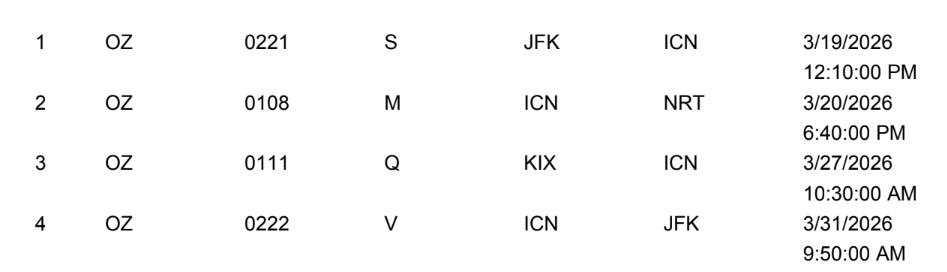
2.Wylot w czwartek 19 marca 2026 o godz. 12:10 w południe z Nowego Jorku (JFK)- Terminal 1, ASIANA AIRLINES OZ 0221. Na lotnisku trzeba być 3 godz. wcześniej. Czekamy w hali odlotów do odnotowania namojej liście wyjeżdżających.
3.Do samolotu możemy zabrać bagaż podręczny 8 kg i bagaż główny 23. Adres na zawieszkach walizkowych przy wylocie z Nowego Jorku: Hotel Mystays Haneda Tokyo
4.Przewodnicy: Japan Ms. May+818092862683/ Korea Sunny Tse+822 720-2861/+82 10-4133-2668. Mr. Carlos +818093441580
5.Emergency Contact: Miu Lee 718-939-3838 24hr:347-803-8785 Skype: miulee.3 WeChat: miumiu563341865
6.Realizacja wyjazdu: K&M International Travel Inc. Address:136-77 Roosevelt Ave Suite 202 Flushing NY 11354 Tel: 718-939-3838 24hr:347-803-8785 WeChat:miumiu563341865 QQ:563341865 Skype: miu.lee3 www.gokmtravel.com
7.Hotele w czasie naszego wyjazdu:
20 MAR / 22 MAR 2 Nights Tokyo Japan – Hotel Mystays Haneda 5 Chome-1-13 Haneda, Ota City, Tokyo 144-0043, Japan +81 3-6863-5539
22 MAR / 23 MAR 1 Night Hamamatsu Grand Mercure Lake Hamana Resort and Spa Yamazaki-4396 ‐1 Yutocho Yamazaki, Chuo Ward, Hamamatsu, Shizuoka 431 0101, Japan +81 53-592-2222
23 MAR / 26 MAR 3 Nights Kyoto Japan- Hotel Heian No Mori Kyoto 51 Okazaki Higashitennocho, Sakyo Ward, Kyoto, 606- 8332, Japan +81 75-761-3130
26 MAR / 27 MAR 1Night Osaka Japan Washington Hotel Kansai Airport 598-8522 Osaka, Izumisano, Rinkuoraikita, 1−7 +81 72-461-2222
27 MAR/ 31 MAR 4 Nights Seoul South Korea Shilla Stay Guro Digital Complex Station 596 Siheung-daero, Dongjak District, Seoul, South Korea +82 2-2162-9000 guro@shillastay.com
8.Organizacja całości: Nowojorski Klub Podróżnika- Ks. Ryszard: nytravelclub.pl /T.347 876 3738 (najlepiej kontaktować się poza USA przez SMS, WhatsApp i Messenger) / rkoper2@gmail.com / rkoper@hotmail.com
9.Szczegółowy program, Internet, elektryczność, wtyczki, waluta, wymiana pieniędzy i inne informacje są w załączniku przesłanym mailem.
10.Zaleca się zabranie ze sobą: Wygodne obuwie typu sneakers, w niektórych miejscach wygodne są sandały, skarpety i ubrania najlepiej z naturalnych tworzyw, nakrycie głowy, okulary przeciwsłoneczne, coś od deszczu, kurtkę sweter (temperatura może być od 5 nocą do 25 w dzień). Dobrze mieć antybiotyk, leki od przeziębienia, zatrucia itp. (czasami kieliszek koniaku lub domowej nalewki jest najbardziej skuteczny)
Uwaga: Tę kartkę dobrze mieć zawsze przy sobie.
1.Przed wyjściem z domu proszę sprawdzić, czy mamy: Paszport, który powinien być ważny 6 miesięcy przed wyjazdem z docelowego kraju. Zabrać ze sobą kopię ubezpieczenia na piśmie lub elektroniczną wersję (link do ubezpieczenia: https://www.allianztravelin-surance.com ). Najlepiej wykupić ubezpieczenie na cały rok i na wszystkie wyjazdy- $125. Jeśli możliwe, to proszę zabrać ze sobą wydruk biletu elektronicznego oraz program wyjazdu.
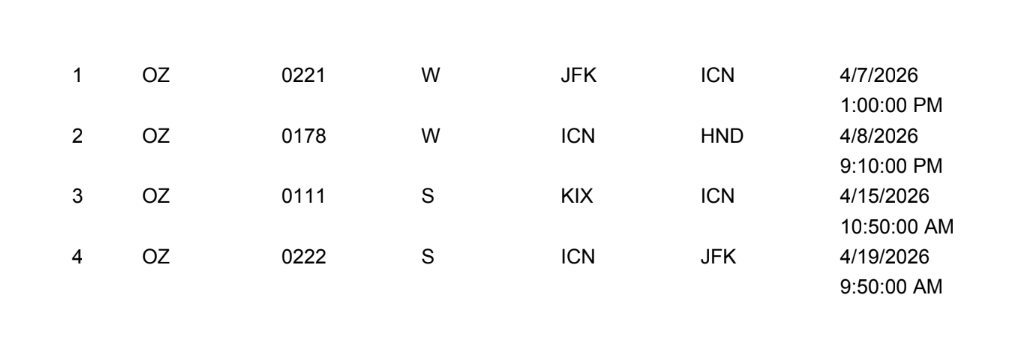
2.Wylot we wtorek 7 kwietnia 2026 o godz. 11:45 AM z Nowego Jorku (JFK)- Terminal 2, ASIANA AIRLINES OZ 0221. Na lotnisku trzeba być 3 godz. wcześniej. Czekamy w hali odlotów do odnotowania namojej liście wyjeżdżających.
3.Do samolotu możemy zabrać bagaż podręczny 8 kg i bagaż główny 23. Adres na zawieszkach walizkowych przy wylocie z Nowego Jorku: Ibis Styles Tokyo Bay Tokyo
4.Przewodnicy: Japan Ms. May+818092862683/ Korea Sunny Tse+822 720-2861/+82 10-4133-2668 Mr. Carlos +818093441580
5.Emergency Contact: Miu Lee 718-939-3838 24hr:347-803-8785 Skype: miulee.3 WeChat: miumiu563341865
6.Realizacja wyjazdu: K&M International Travel Inc. Address:136-77 Roosevelt Ave Suite 202 Flushing NY 11354 Tel: 718-939-3838 24hr:347-803-8785 WeChat:miumiu563341865 QQ:563341865 Skype: miu.lee3 www.gokmtravel.com
7.Hotele w czasie naszego wyjazdu:
08 APR / 10 APR 2 Nights Tokyo Japan – Ibis Styles Tokyo Bay 2 Chome-1-1 Hinode, Urayasu, Chiba 279-0013, Japan +81 47-381-6775
10 APR / 11 APR 1 Night Hakone Japan Grand Mercure Lake Hamana Resort and Spa Yamazaki-4396 ‐1 Yutocho Yamazaki, Chuo Ward, Hamamatsu, Shizuoka 431-0101, Japan +81 53-592-2222
11 APR / 14APR 3 Nights Kyoto Japan The Celecton Kyoto Horikawa Sanjo Japan, 604-8333 Kyoto, Nakagyo Ward +81 75-556-0888
14 APR / 15 APR 1Night Osaka Japan Washington Hotel Kansai Airport 598-8522 Osaka, Izumisano, Rinkuoraikita, 1−7 +81 72-461-2222
15 APR / 19 APR 4 Nights Seoul South Korea Shilla Stay Guro Digital Complex Station 596 Siheung-daero, Dongjak District, Seoul, South Korea +82 2-2162-9000
8.Organizacja całości: Nowojorski Klub Podróżnika- Ks. Ryszard: nytravelclub.pl /T.347 876 3738 (najlepiej kontaktować się poza USA przez SMS, WhatsApp i Messenger) / rkoper2@gmail.com / rkoper@hotmail.com
9.Szczegółowy program, Internet, elektryczność, wtyczki, waluta, wymiana pieniędzy i inne informacje są w załączniku przesłanym mailem.
10.Zaleca się zabranie ze sobą: Wygodne obuwie typu sneakers, w niektórych miejscach wygodne są sandały, skarpety i ubrania najlepiej z naturalnych tworzyw, nakrycie głowy, okulary przeciwsłoneczne, coś od deszczu, kurtkę sweter (temperatura może być od 5 nocą do 25 w dzień). Dobrze mieć antybiotyk, leki od przeziębienia, zatrucia itp. (czasami kieliszek koniaku lub domowej nalewki jest najbardziej skuteczny)
Uwaga: Tę kartkę dobrze mieć zawsze przy sobie.
Na ostatnie wyjazdy do Japonii i Korei oraz Kenii i Tanzanii nieodpowiedzialnie zapisało się i nieodpowiedzialnie zrezygnowało z wyjazdu kilka osób, żądając 100% zwrotu za wyjazdy. Ta nieodpowiedzialność sprawia, że nasz Klub nie może normalnie funkcjonować, to podważa także zasadę wzajemnego zaufania panującą w naszym Klubie już od 30 lat. Bardzo często rezygnacja z wyjazdu wiąże się z utratą taryfy płacowej związanej wielkością grupy, co wiąże się nieraz z podwyższeniem ceny wyjazdu dla pozostałych uczestników wyjazdu.
Nie jesteśmy agencją turystyczną, ale Kubem. W miarę możliwości wspólnie decydujemy, gdzie wyjeżdżamy i co chcemy zobaczyć. Wyjazdy, bilety lotnicze załatwiają dla nas różne agencje turystyczne, które mają własne regulacje związane z rezygnacją wyjazdową. Zadaniem Klubu jest zorganizowanie grupy wyjazdowej i koordynacja programowa i wyjazdowa.
Poniższe regulacje Klubowe związane z rezygnacją wyjazdową nie przekreślają zasady wzajemnego zaufania, którą Klub kieruje się już od prawie 30 lat. Polega ona na tym, że w miarę możliwości staramy się odzyskać jak największy zwrot pieniędzy od agencji turystycznej, która przygotowuje dla nas wyjazd. Szukamy kogoś na miejsce osoby rezygnującej z wyjazdu i bardzo często, nawet kilka dni przed wyjazdem osoba rezygnująca otrzymuje zwrot w 100% z potrąceniem kary za zmianę nazwiska na bilecie lotniczym. Tą zasadą będziemy się kierować dalej i nie pozwolimy, aby kilka nieodpowiedzialnych osób zabrało nam radość wspólnego podróżowania i pielgrzymowania.
Poniższe regulacje odnoszą się przede wszystkim do tych nieodpowiedzialnych osób. Te regulacje znoszą wszystkie inne regulacje rezygnacyjne, które znajdziemy na stronie internetowej Nowojorskiego Klubu Podróżnika.
Zasady rezygnacji:
1.Z powodu nieuzasadnionej rezygnacji z wyjazdu (zasadność ocenia Nowojorski Kub Podróżnika) tracimy 100% zaliczki.
2.Poniżej trzech miesięcy tracimy 50% całej wpłaty.
3.Poniżej miesiąca tracimy 100% wpłaty.
Sądzę, że te regulacje uratują zasadę wzajemnego zaufania, którą kierujemy się w Klubie od 30 lat. Słuszność tej zasady mogą potwierdzić dziesiątki naszych pielgrzymów i podróżników.